


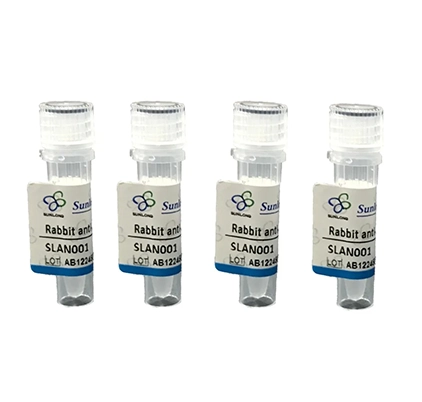
Details
Product types
Flow cytometry antibody
English aliases
CD8; CD8alpha; IMD116; Leu2; p32; Ly-2; Ly-35; Ly-B; Lyt-2; CD8A_HUMAN; CD8A; T-lymphocyte differentiation antigen T8/Leu-2; MAL; CD8A_MOUSE; T-cell surface glycoprotein Lyt-2; Lyt2; G1SX34_RABIT; CD8 subunit alpha; CD8 antigen, alpha polypeptide (p32); T-cell surface glycoprotein CD8 alpha chain; CD8a molecule
Product applications
|
Application |
Species that have passed inspection |
Predict species |
Recommended dilution ratio |
|
Flow-Cyt |
Mouse |
|
1μg/Test |
Not yet tested in other applications.
Optimal working dilutions must be determined by the end user.
Cross-reaction
Mouse
Antibody sources
Rat
Related markings
APCAPC-Cy5.5APC-Cy7BF350BF405BF488BF555BF594BF647BF680BF700BF750BiotinCy3Cy5Cy5.5Cy7FITCPacific BluePEPE-Cy5PE-Cy5.5PE-Cy7PerCPPerCP-Cy5.5PerCP-Cy7RBITC
Subtype
Rat IgG2a, k
Characteristics
Liquid
Purification methods
affinity purified by Protein G
Types of cloning
Monoclonal
and was honored with a title
6B2
Theoretical molecular weight
27 kDa
Molecular weight detection
32 kDa
Storage liquid
0.01M TBS (pH7.4).
Storage conditions
Shipped at 4℃. Store at -20℃ for one year. Avoid repeated freeze/thaw cycles.
Notes
This product as supplied is intended for research use only, not for use in human, therapeutic or diagnostic applications.
Database link
Background information
The CD8 antigen is a cell surface glycoprotein found on most cytotoxic T lymphocytes that mediates efficient cell-cell interactions within the immune system. The CD8 antigen acts as a coreceptor with the T-cell receptor on the T lymphocyte to recognize antigens displayed by an antigen presenting cell in the context of class I MHC molecules. The coreceptor functions as either a homodimer composed of two alpha chains or as a heterodimer composed of one alpha and one beta chain. Both alpha and beta chains share significant homology to immunoglobulin variable light chains. This gene encodes the CD8 alpha chain. Multiple transcript variants encoding different isoforms have been found for this gene. The major protein isoforms of this gene differ by the presence or absence of a transmembrane domain and thus differ in being a membrane-anchored or secreted protein. [provided by RefSeq, May 2020]
Partial purchase records (0)
Leave a message
Call us
+86 0571 56623320
Address
Room 1-315, Kongle Changqing Building, No. 160 Guangye Road,Gongshu District, Hangzhou City, Zhejiang Province, China
About Us Contact Us Privacy Policy Shipping Policy Payment Policy Quality Guarantee Return & Refund policy Download Product list Distributors


 +86 0571 56623320
 [email protected]
 +86 18668110335

Scan Wechat Qrcode





 Manual