


Details
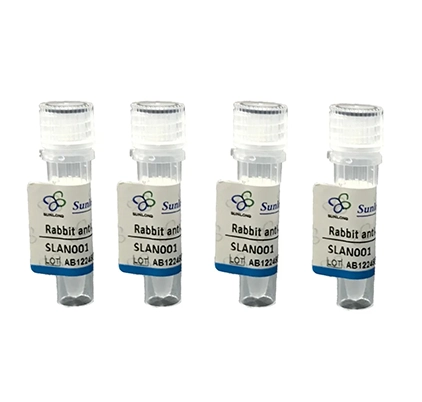
| Product Name | CBLN2 / AF647 |
| Chinese Name | AbBy Fluor® 647标记的小脑肽2抗体 |
| Alias | A730004O05; Cbln2; CBLN2_HUMAN; Cerebellin 2; Cerebellin 2 precursor; Cerebellin-2; OTTHUMP00000163726. |
| Research Area | Cell biology Neurobiology |
| Immunogen Species | Rabbit |
| Clonality | Polyclonal |
| React Species | Rat(predicted:Human,Mouse,Dog,Pig,Cow,Horse,Rabbit) |
| Applications | IF=1:100-500
not yet tested in other applications. optimal dilutions/concentrations should be determined by the end user. |
| Theoretical molecular weight | 24kDa |
| Cellular localization | The cell membrane |
| Form | Liquid |
| Concentration | 1mg/ml |
| immunogen | KLH conjugated synthetic peptide derived from human CBLN2: 151-224/224 |
| Lsotype | IgG |
| Purification | affinity purified by Protein A |
| Buffer Solution | 1M TBS(pH7.4) with 1% BSA, 3% Proclin300 and 50% Glycerol. |
| Storage | Shipped at 4℃. Store at -20 °C for one year. Avoid repeated freeze/thaw cycles. |
| Attention | This product as supplied is intended for research use only, not for use in human, therapeutic or diagnostic applications. |
| PubMed | PubMed |
| Product Detail |
Cerebellin (CER), which was originally isolated from rat cerebellum, is a hexadecapeptide derived from a larger precursor Cerebellin 1, also designated precerebellin 1 or Cbln1. Four propeptides, Cerebellin 1, Cerebellin 2 (Cbln2), Cerebellin 3 (Cbln3), and Cerebellin 4 (Cbln4), comprise the precerebellin subfamily within the C1q protein family. Cerebellin family members act as transneuronal regulators of synapse development and synaptic plasticity in various brain regions. CER and it metabolite des-Ser1-cerebellin are also expressed in several extra-cerebellar tissues, including adrenal gland. Cerebellin 1, 2 and 3 assemble into homomeric and heteromeric complexes, thereby influencing each other’s degradation and secretion. Cerebellin 3 is not able to form homomeric complexes, and can only be secreted upon forming a heteromeric complex with Cerebellin 1. Decreased concentrations of CER has been found in the brain of patients with olivopontocerebellar atrophy (OPCA) and Shy-Drager syndrome, suggesting a role for CER in the pathology of these diseases. SWISS: Q8IUK8 Gene ID: 147381 Database links: Entrez Gene: 147381 Human Entrez Gene: 12405 Mouse Omim: 600433 Human SwissProt: Q8IUK8 Human SwissProt: Q8BGU2 Mouse Unigene: 569851 Human Unigene: 70775 Mouse Unigene: 16398 Rat |
Ordering & shipping
Partial purchase records (2)
| Username | Quantity | bought time |
| La*** | 1 | 2026-05-11 |
| Is*** | 1 | 2026-04-28 |
Leave a message
Call us
+86 0571 56623320
Address
Room 1-315, Kongle Changqing Building, No. 160 Guangye Road,Gongshu District, Hangzhou City, Zhejiang Province, China
About Us Contact Us Privacy Policy Shipping Policy Payment Policy Quality Guarantee Return & Refund policy Download Product list Distributors


 +86 0571 56623320
 [email protected]
 +86 18668110335


Scan Wechat Qrcode





 Manual
