


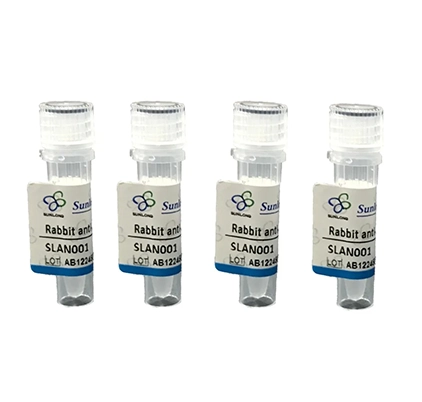
Details
| Product Name | Di-Methyl-Histone H3 (Lys79) |
| Product Type | Methylated anti |
| Immunogen Species | Rabbit |
| Clonality | Polyclonal |
| React Species | Human,Mouse,Rat |
| Applications | WB=1:500-2000,IHC-P=1:100-500,IHC-F=1:100-500,IF=1:100-500,IP=1:10-50(Paraffin sections need antigen repair) not yet tested in other applications. optimal dilutions/concentrations should be determined by the end user. |
| Cellular localization | The nucleus |
| Form | Liquid |
| Concentration | 1mg/ml |
| Lsotype | IgG |
| Purification | Antigen affinity purification |
| Buffer Solution | 1M TBS(pH7.4) with 1% BSA, 3% Proclin300 and 50% Glycerol. |
| Storage | Shipped at 4℃. Store at -20 °C for one year. Avoid repeated freeze/thaw cycles. |
| Attention | This product as supplied is intended for research use only, not for use in human, therapeutic or diagnostic applications. |
| PubMed | PubMed |
| Product Detail | Post-translational modifications (PTMs) of histones are a key mechanism in epigenetics for regulating chromatin structure, known as the "histone code." Post-translational modifications on histones include acetylation, methylation, phosphorylation, and some newly discovered acylation modifications in recent years. These histone modifications directly affect the binding of chromatin to transcription factors or other epigenetic regulators, altering genome stability and gene transcription, among other processes. Histone methylation typically occurs on lysine and arginine residues of core histones. Histone methylation can either promote or inhibit gene transcription, depending on whether the histone methylation occurs on lysine or arginine, as well as the number of methyl groups (lysine can undergo mono-, di-, and tri-methylation, while arginine can undergo mono-, symmetric, and asymmetric dimethylation). Histone lysine methylation usually occurs on lysine residues at positions 4, 9, 27, 36, 79 of histone H3 and position 20 of histone H4; arginine methylation typically occurs on arginine residues at positions 2, 8, 17, 26 of histone H3 and position 3 of histone H4. Protein methyltransferases (HMTs) and histone demethylases (HDMs) are the main regulatory factors for methylation modifications. |
Partial purchase records (0)
Leave a message
Call us
+86 0571 56623320
Address
Room 1-315, Kongle Changqing Building, No. 160 Guangye Road,Gongshu District, Hangzhou City, Zhejiang Province, China
About Us Contact Us Privacy Policy Shipping Policy Payment Policy Quality Guarantee Return & Refund policy Download Product list Distributors


 +86 0571 56623320
 [email protected]
 +86 18668110335

Scan Wechat Qrcode





 Manual